












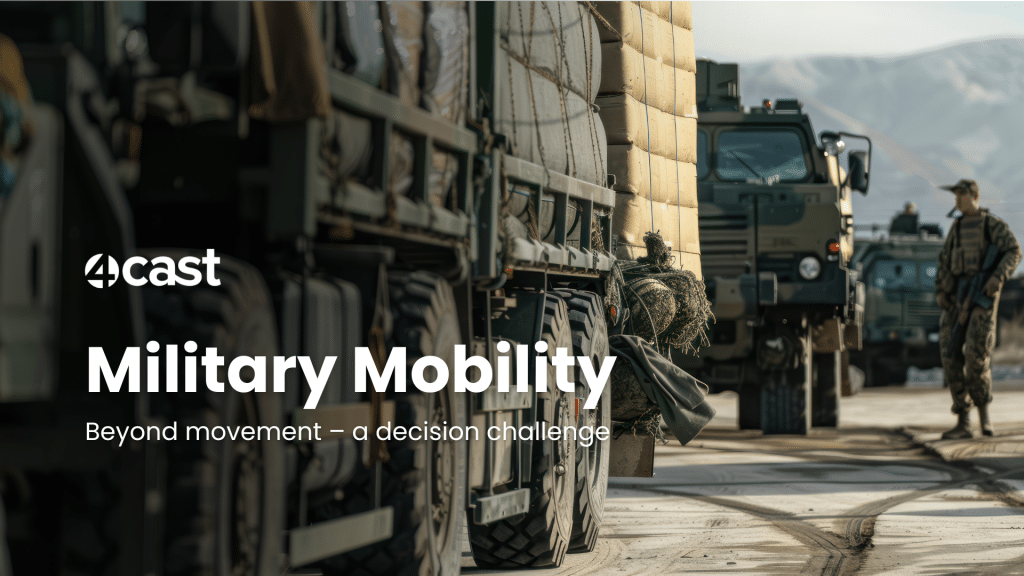
Military Mobility | Beyond movement – a decision challenge
Maintaining a high level of military readiness has always been a challenge. But in today’s European security environment, it has become a defining one.
For Western militaries, readiness increasingly comes down to a simpler – and harder – question: Can forces actually get where they are needed, when it matters most?
Can forces actually get where they are needed, when it matters most?
For NATO, this question has become central to deterrence and defense, particularly following Russia’s invasion of Ukraine and the rise in sabotage operations across Europe.
Nowhere is this more evident than along Europe’s Eastern Flank, where time, distance, and friction can shape strategic outcomes.
Getting to the Fight Is Part of the Fight
In a contested environment, getting to the fight, moving forces, equipment, and logistics across borders and infrastructures, is itself a complex operational challenge. As recent analyses have pointed out, NATO’s challenge today is not only to be ready for war in principle, but to be ready to fight and prevail in practice.
This challenge is widely recognized by NATO and the European Union, and is referred to as Military Mobility.
Military Mobility is about speed, coordination, and resilience – across civilian and military systems, and across national boundaries. Without it, readiness remains theoretical.
In practice, Military Mobility is shaped by a combination of systems that must work together under pressure:
- Roads, railways, ports, and military facilities
- Civilian and military logistics systems
- Coordination between nations, agencies, and commands

But infrastructure alone does not guarantee mobility. Only fast and focused Military Mobility across Europe, the kind that allows forces and logistics to move when and where they are needed, enables NATO to provide true cooperative security and leverage its strength as an alliance.
What matters just as much as physical assets is how systems are prioritized, protected, and used under pressure, especially when they are exposed to disruption or attack. This is how mobility becomes readiness, resilience – and, ultimately, deterrence.
Known challenge — shaped by new realities
Military Mobility is not a new problem for Europe or for NATO. It was already recognized well before Russia’s invasion of Ukraine in 2022. What has changed is the level of urgency and attention it now receives from both NATO and European Union leadership.
A growing body of reports on the state of Military Mobility in Europe points to a clear gap in readiness and resilience. These assessments stress the need not only to allocate proper resources for upgrading mobility infrastructure – such as roads, railways, and military facilities – but also to address long-standing protocol and procedural barriers that slow movement across Europe.
From enabling movement to making choices
This reality helps explain the EU’s push to advance the idea of a “Military Schengen”.
Reducing bureaucratic and regulatory friction is a necessary step toward enabling faster movement of forces across Europe and toward better leveraging the combined strength of Europe and NATO to deter Russia and respond to aggression. At the military level, these efforts are closely aligned with broader NATO initiatives aimed at increasing readiness and enhancing deterrence across the alliance.
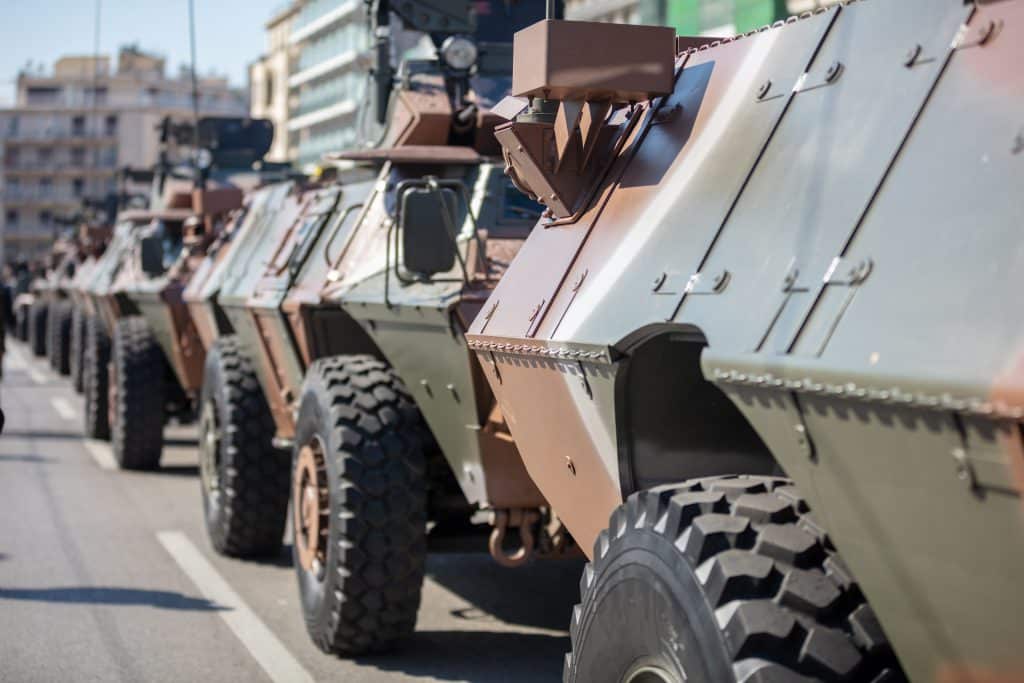
Improving Military Mobility ultimately requires deliberate choices and trade-offs, in other words, risk management.
Resources are finite. Not every road, rail line, or facility can be upgraded at once. EU nations, and the EU as a whole, must prioritize investments in the most critical infrastructures – many of which are also vulnerable to physical and digital attacks. In parallel, NATO and European militaries must ensure that their operational plans remain viable under disruption. Mobility plans cannot assume stability; they must be adaptable, resilient, and stress-tested to ensure continuity of operations when key infrastructures are degraded or denied.
Decision Intelligence as a guiding lighthouse
Decisions of this scale must be grounded in past data – but guided by a clear objective. In the context of Military Mobility, mission success serves as the lighthouse: the fixed point against which trade-offs are evaluated, risks are weighed, and priorities are set.
Mission success serves as the lighthouse: the fixed point against which trade-offs are evaluated, risks are weighed, and priorities are set
This is where the discipline and practice of Decision Intelligence (DI) comes in. By relying on AI-powered modeling and simulation techniques, Decision Intelligence expands the decision space. It allows leaders to assess the future outcomes of present decisions – not after the fact, but before resources are committed and paths are locked in. This approach supports military planning under uncertainty and strengthens the resilience of critical national infrastructures that underpin Military Mobility, readiness, and deterrence.